

Dear Jonathan, I have an interview in 2 days’ time and since it’s the first interview I will have had since coming to Oxford 3 years ago, am wondering how to be successful?
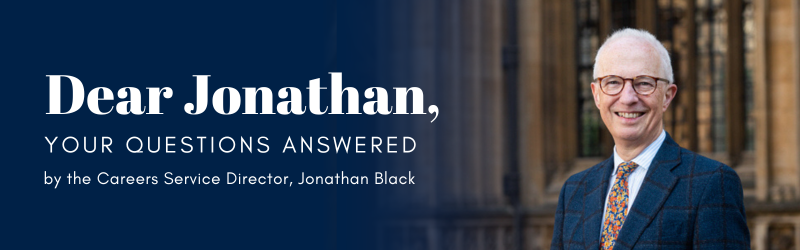
Dear Jonathan,
I have an interview in 2 days’ time and since it’s the first interview I will have had since coming to Oxford 3 years ago, am wondering how to be successful? What are the top tips? I’ve made 60 applications for jobs, and this is the first interview I’ve got, so I don’t want to mess it up.
Congratulations on being called for an interview, especially after so many applications. Remember that whether you eventually get the job or not is the recruiter’s decision, not yours. Your job in an interview is to show how you are the person who applied.
Overall, the fact they want to meet you is that, on paper, they think you can do the job. You have the technical and employability skills they seek for the role. They also, like you, really want the interview to go well so they can offer you the job and work with you. This should give you some confidence, and as you walk into the room, or log in online for a video interview, actively recall that they think you can do the job.
So how to confirm you are that person? Principally, interviewers are asking themselves one question: do I want to work with this person? If we break this down, they will ask questions to see if you take responsibility, achieve things, and collaborate well in a team. Prepare and rehearse the stories you will tell to demonstrate leadership, teamwork, responsibility and all the elements in their job description. The STAR structure (Situation, Task, Action, Result) can be helpful: Describe a situation (very brief), explain the task you had to do; set out clearly, specifically and with detail – the actions you took. Make sure it's clear what YOUR specific responsibilities/tasks were; and finally, describe the result - quantify if appropriate eg: increased member attendance numbers by 45%
Treat the interview as a performance. Sit forward, make eye contact, smile, and dress well. It’s OK to dress smarter than the organisation, as it can reinforce your own confidence. Avoid distracting jewellery, ties, scent etc. If the interview is in person, then allow sufficient time to get there; performing musicians talk about travelling “two trains early.”
Finally, remember that they are human beings: there are examples of people getting jobs even though they said, “I haven’t got an answer for that, can I come back to it?” (and they did come back to it) and “I’ve thought of a better example for that question you asked me.” Perhaps not super-smooth, but engaging.
Good luck and enjoy the interview.
Jonathan Black - Director, Oxford University Careers Service
Read more guidance on Interviewing:
- Types of Interview
- Interview Technique
- Make a Good First Impression
- Case Study Style Interviews
- Telephone and Video Interviews
- Legal Case Study Interviews.
About the Dear Jonathan column
For six years, the Oxford University Careers Service Director Jonathan Black, wrote a fortnightly column for the Financial Times answering readers’ careers questions - you can still find it here.
Now, the “Dear Jonathan" column has come to Oxford.
If you are an Oxford University student, send in your career question to dear.jonathan@careers.ox.ac.uk and each week of term, he will answer one of the questions in this feature. We’ll anonymise the author (but please tell us whatever is relevant) so you can be sure that readers won’t know it’s you

